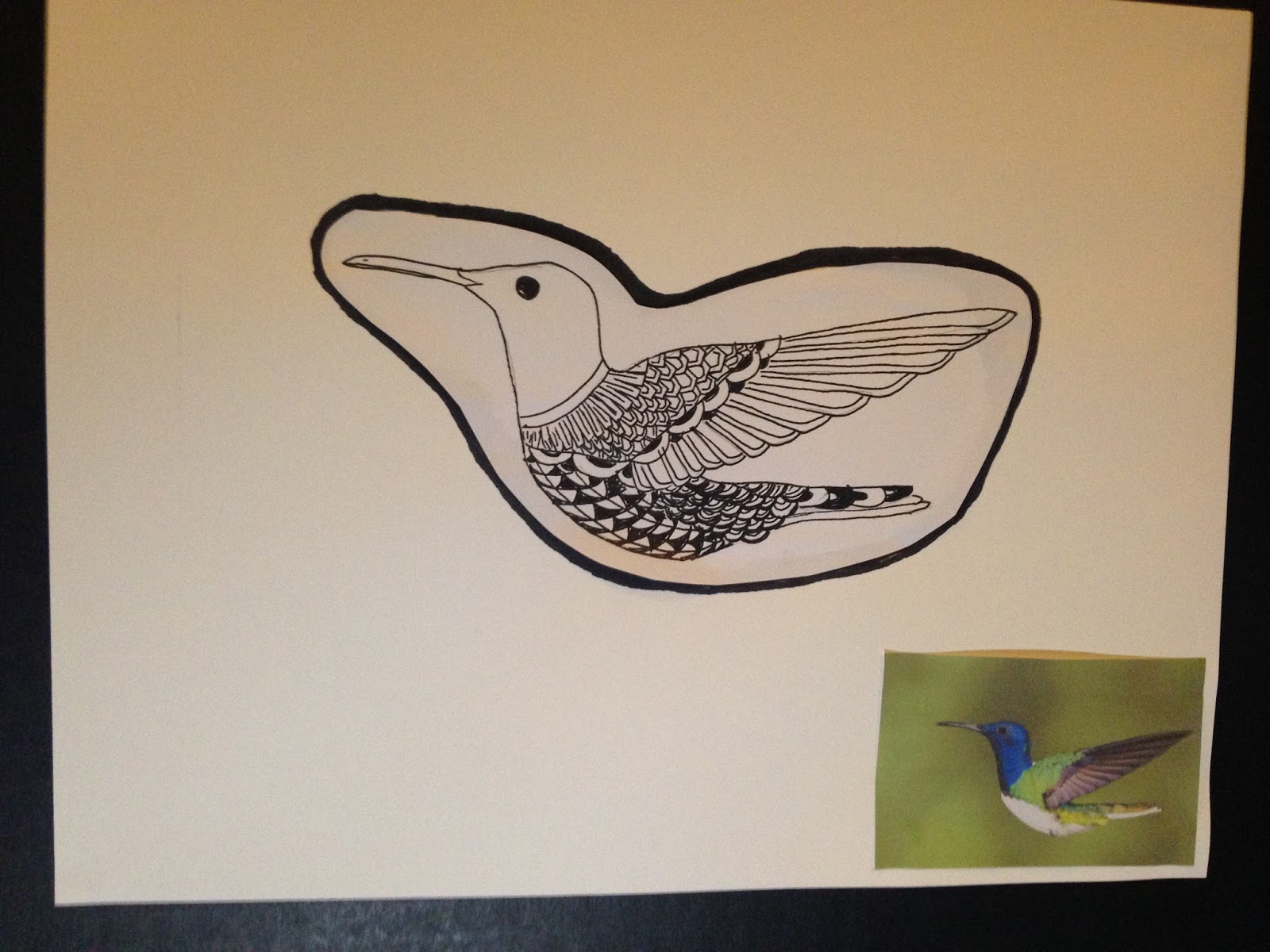
Principles of design are what make things appealing to the eye. If you are trying to improve the look of something or you have been an artist your whole life. Design Principles help you understand the thinking behind your art.
REPETITION REPETITION REPETITION - repeating a color, line, texture, value or shape in your piece.
Repetition is used a lot in patterns or in art forms like zentangling. Here is an example of both repeated shape and repeated value.
Repetition can also be much more subtle. Like if you have a picture with a house in it the repetition may be the bricks or the windows or the sidewalk.
transition - How the eye moves through the piece.
The transition is important for many pieces of art. For example this blog transitions downward so I wouldn't start writing the text from the bottom and go up. This gets very complicated in a comic book because you have a story that you want them to follow. Sometimes this can vary based on the viewer, like in an optical illusion.
Here is an example of very basic transition.
Transition can just be simply what is the easiest thing to make out in the picture. Here is in an example.
The woman pops out before the sunset behind here. In this case, this is a transition using color.
I hope you enjoyed this. If you did and you want to see the other three design principles let me know in the comments! Also, brownie points for anyone who can post a picture in the comment of n example of either of these Design Principles.